
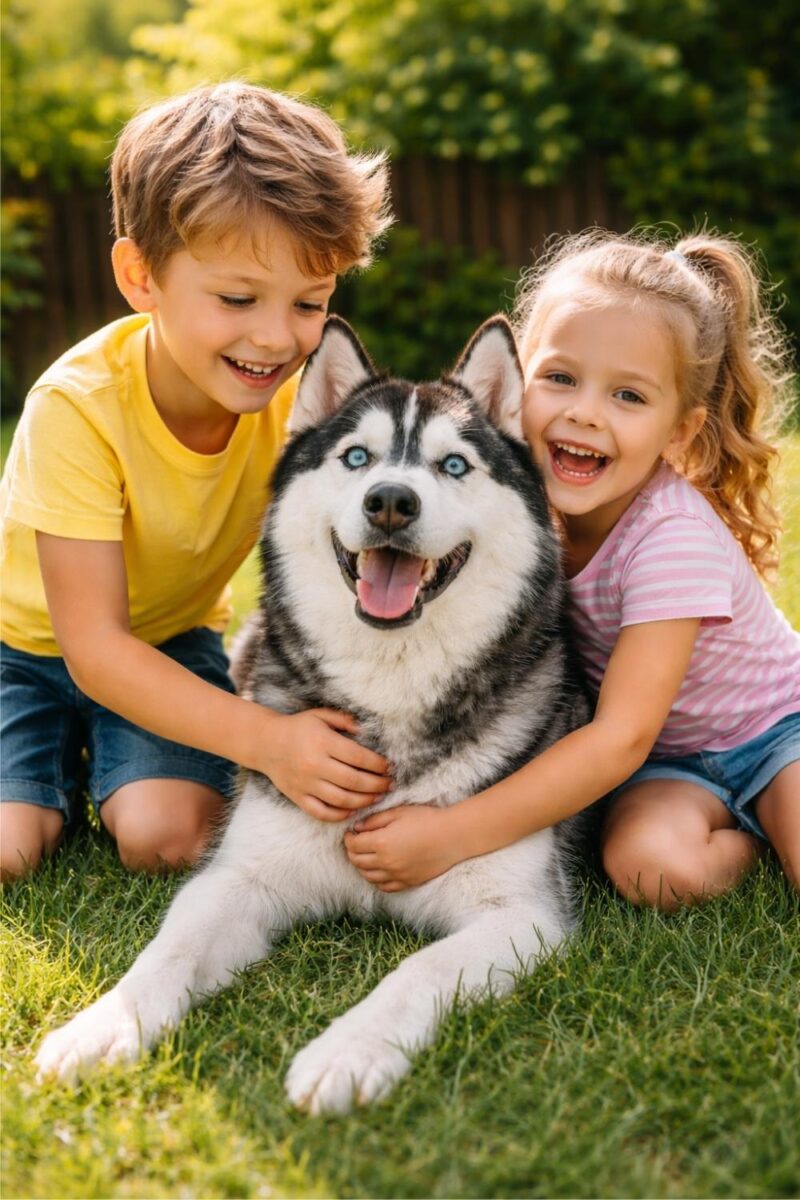
Siberian Huskies are one of the most eye-catching dog breeds in the world. With their wolf-like looks, bright blue eyes, and playful personalities, it’s no surprise many families ask the same question before bringing one home: are huskies good with kids?
The truthful answer is yes—huskies can be great with kids, but they are not automatically the right choice for every family. Their temperament, energy level, and training needs matter a lot. This guide breaks everything down clearly so you can decide if a husky is a good fit for your household.
Husky Temperament: What They’re Like With Children
Huskies were bred to work closely with humans in packs, pulling sleds and living alongside families. This history shaped their personality in important ways.
Natural Traits That Help With Kids
Most well-bred, well-socialized huskies are:
- Friendly and people-oriented
- Playful and affectionate
- Gentle rather than aggressive
- Curious and social
Unlike many guard breeds, huskies typically do not show strong territorial or protective aggression, which reduces the risk of dangerous behavior around children.
Many huskies genuinely enjoy being part of family activity—especially if kids are involved in play, walks, or outdoor adventures.
Why Huskies Can Be Great Family Dogs
1. Huskies Are Extremely Social
Huskies tend to bond with everyone in the household rather than attaching to just one person. This makes them:
- Less likely to resent kids
- More tolerant of noise and movement
- Happier in busy homes
They usually see children as pack members, not threats.
2. Playful Energy Matches Older Kids Well
Huskies have high energy, which can be a huge plus in families with:
- Active kids
- Teens who enjoy outdoor play
- Families who hike, run, or bike
A husky can become a true playmate for older children who know how to interact respectfully with dogs.
3. Low Aggression Compared to Many Breeds
Huskies consistently rank low for:
- Bite incidents
- Territorial aggression
- Resource guarding (with proper training)
This doesn’t mean they’re harmless—but it does mean they’re generally less reactive than many other large breeds.
Challenges of Huskies Around Kids
This is where honesty matters most.
1. Huskies Are Big, Strong, and Clumsy
Adult huskies typically weigh 35–60 pounds and are powerful movers. This can be an issue with:
- Toddlers
- Very young children
- Kids who are unsteady on their feet
A husky doesn’t need to be aggressive to knock over a child—they can do it just by being excited.
2. High Energy Can Be Overwhelming
Huskies are not calm couch dogs. Without enough exercise, they may:
- Jump
- Mouth hands during play
- Become overly excitable
- Ignore boundaries
In a home with kids, this means daily physical and mental stimulation is non-negotiable.
3. Huskies Are Independent Thinkers
Unlike breeds bred to obey instantly, huskies:
- Question commands
- Test limits
- Get bored with repetition
This means kids should not be responsible for training. Adults must take the lead to ensure consistency and safety.
Are Huskies Good With Toddlers and Babies?
This is where families should be extra cautious.
With Babies
Huskies are usually:
- Curious, not aggressive
- Gentle if properly introduced
However:
- Babies make sudden noises
- They grab fur
- They don’t understand boundaries
Constant supervision is required. A husky should never be left alone with a baby, even briefly.
With Toddlers
Toddlers are more challenging because they:
- Move unpredictably
- Fall into dogs
- Pull ears or tails
Huskies can tolerate a lot—but tolerance has limits. Families with toddlers must commit to:
- Teaching kids how to interact with dogs
- Separating dog and child during high-energy moments
- Using baby gates or safe zones
Teaching Kids How to Treat a Husky
A husky being “good with kids” depends just as much on the kids.
Teach children to:
- Never pull ears, tails, or fur
- Avoid hugging the dog tightly
- Leave the dog alone while eating or sleeping
- Recognize warning signs (growling, backing away)
When kids respect a husky’s boundaries, the relationship thrives.
Training and Socialization Are Non-Negotiable
A husky raised with kids is usually more tolerant—but training still matters.
Essential Training for Kid-Friendly Huskies
- Basic obedience (sit, stay, leave it)
- Impulse control
- No jumping rules
- Gentle mouth behavior
- Crate or quiet space training
Early socialization with calm, respectful children dramatically improves outcomes.
Do Huskies Protect Kids?
Huskies are not guard dogs. They may:
- Alert you with barking
- Stand between a child and a stranger out of curiosity
But they are more likely to greet an intruder than scare one off.
Their strength is companionship, not protection.
When Huskies Are NOT a Good Fit for Families
A husky may not be ideal if:
- You have very young children and little time for training
- Your household is low-energy
- You want an easy, obedient dog
- You can’t commit to daily exercise
Huskies thrive in families who see dogs as active participants, not background pets.
Final Verdict: Are Huskies Good With Kids?
Yes—huskies can be wonderful family dogs, especially for households with:
- Older children
- Active lifestyles
- Clear rules and supervision
- Commitment to training and exercise
They are loving, playful, and rarely aggressive—but they are not low-effort dogs.
If your family is ready to invest the time and energy, a husky can grow up to be a loyal, gentle, and unforgettable companion for your children.